Greta Albrecht · 14 September 2026
The Science of Foggy Basements: Techniques for Managing Condensation in Storage Areas
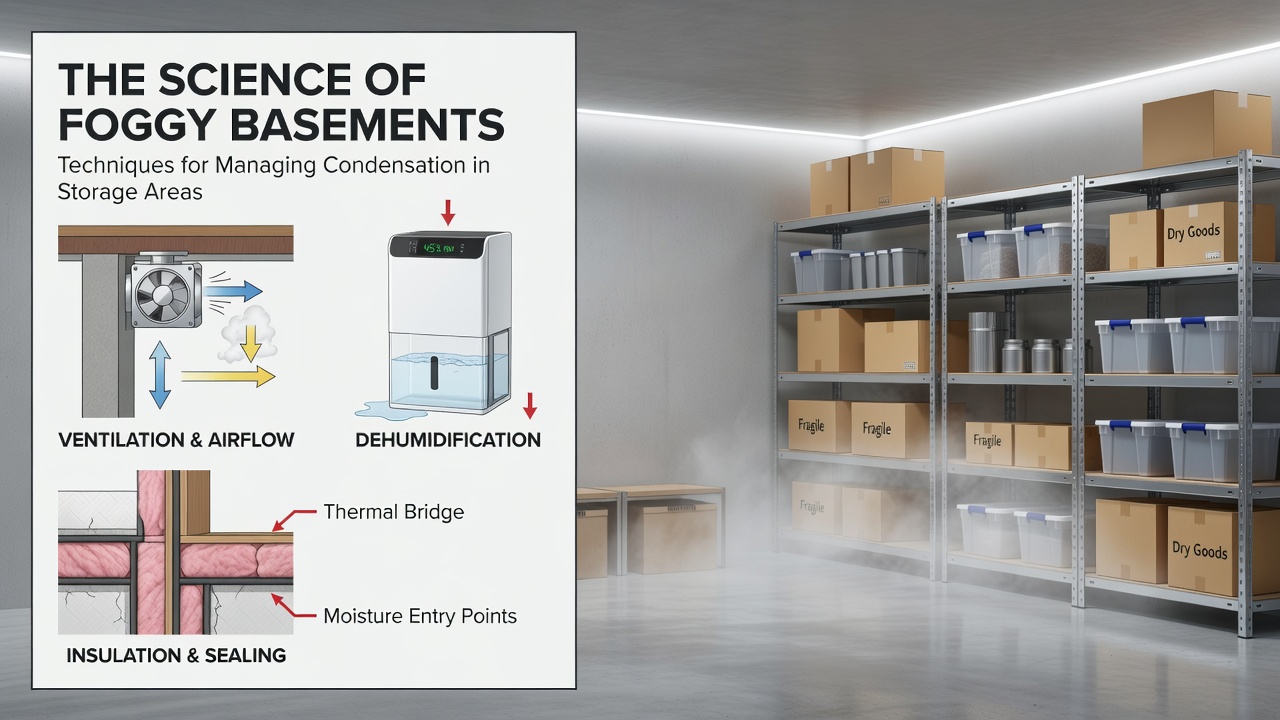
Basements often develop foggy conditions when warm, humid air contacts cooler surfaces such as concrete walls and floors, and this process begins once the air temperature drops below the dew point. Researchers at institutions studying building science have measured relative humidity levels exceeding 60 percent in many below-grade spaces, where moisture from soil and groundwater migrates upward through foundations. Data collected across multiple climates shows that condensation forms most readily during seasonal temperature swings, particularly when outdoor air cools rapidly while interior spaces retain stored heat from upper levels of the structure. The physics involved centers on vapor pressure differences, and moisture moves from areas of higher concentration to lower ones until equilibrium occurs. Studies published in building performance journals indicate that uninsulated concrete retains temperatures several degrees below ambient air for extended periods, creating consistent cold spots that trigger droplet formation. Those who monitor storage areas report visible fog when ventilation rates fall below recommended air changes per hour, allowing water vapor to accumulate without adequate exchange with drier exterior air. Effective management starts with accurate measurement of both temperature and humidity, and digital sensors placed at floor level and mid-wall height provide readings that guide subsequent interventions. Professionals who install vapor barriers on interior walls note reduced moisture transmission when polyethylene sheets overlap seams by at least six inches and seal tightly to the foundation. Meanwhile, exterior grading adjustments direct rainwater away from foundation perimeters, and this step addresses one primary source of excess groundwater that otherwise infiltrates through cracks. Dehumidification equipment sized according to basement square footage removes several pints of water daily when operated continuously, and models equipped with automatic defrost cycles maintain performance even when coil temperatures fall near freezing. Research from North American laboratories demonstrates that pairing dehumidifiers with exhaust fans controlled by humidistats achieves lower average humidity than either device alone. In regions with colder winters, such as parts of Canada, additional insulation placed on the exterior side of foundation walls prevents thermal bridging that would otherwise keep surfaces cold enough for ongoing condensation. Ventilation strategies vary by climate zone, and supply air from conditioned upper floors can stabilize temperatures when introduced through dedicated ducts. Australian building authorities have documented success with balanced ventilation systems that exchange basement air at rates sufficient to keep relative humidity under 55 percent without introducing excessive outdoor moisture during humid summer months. Sealing penetrations around pipes and electrical entries further limits pathways for humid air to enter storage zones, and this detail proves especially useful in older structures where gaps have widened over decades. One case examined by European research teams involved a storage facility where condensation damaged archived documents until a combination of perimeter drains and interior air circulation reduced surface moisture to levels that no longer supported mold growth. Periodic inspection of these systems reveals when filters require replacement or when sump pumps need servicing to maintain drainage capacity. Figures from the U.S. Department of Energy indicate that properly implemented moisture control measures can lower energy costs associated with heating and cooling by limiting latent load on HVAC equipment serving the entire building. Additional techniques include the application of waterproof coatings on interior walls, though these perform best when applied after cracks have been injected with epoxy or polyurethane. Storage organizers who elevate items on pallets or shelving keep contents away from floor-level moisture that collects during heavy rain events. Monitoring programs established by property managers often include quarterly checks of relative humidity logs, and trends in those records help predict when additional capacity for dehumidification becomes necessary. 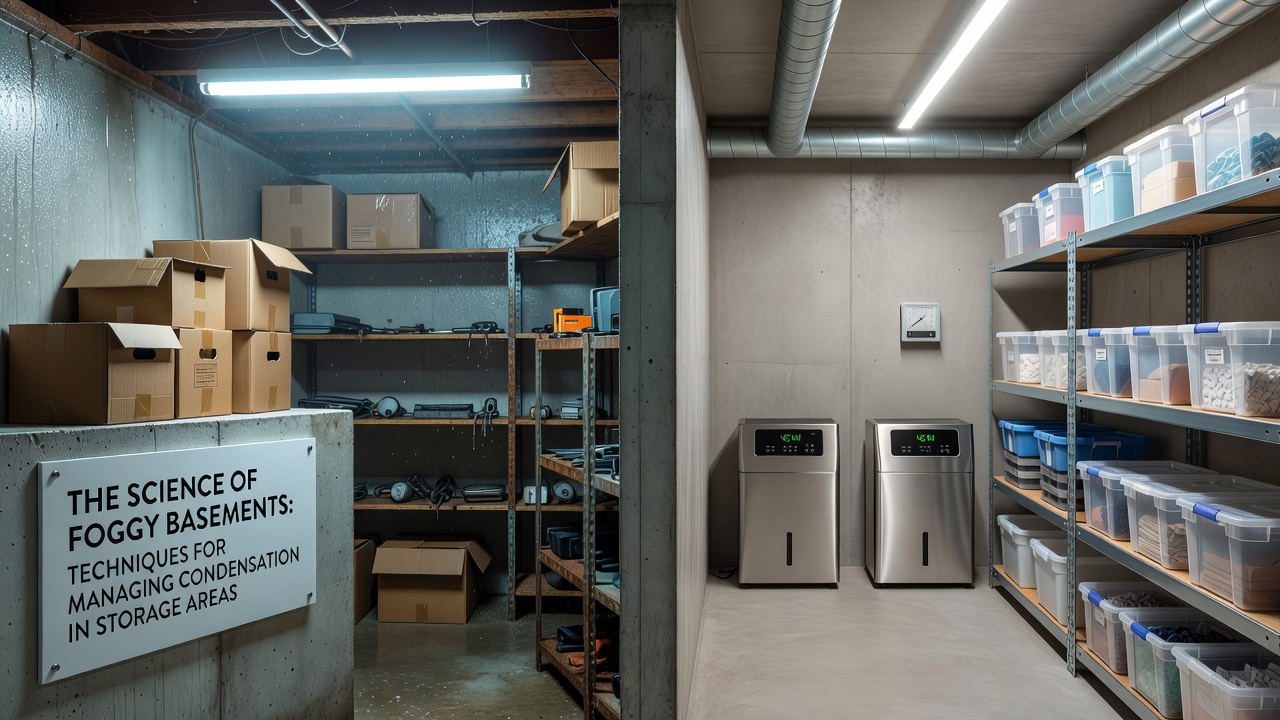 Long-term solutions frequently incorporate exterior waterproofing membranes applied during foundation repairs, and these membranes interrupt capillary action that draws soil moisture into concrete. Thermal imaging conducted by building diagnosticians identifies remaining cold spots after initial treatments, allowing targeted insulation additions without full excavation. In commercial settings, facility engineers coordinate these upgrades with scheduled maintenance windows to minimize disruption to stored inventory. Data compiled by international building science organizations continues to refine guidelines for acceptable humidity ranges in storage environments, and updated models account for climate projections that anticipate more frequent extreme precipitation in many areas. Those responsible for preserving sensitive materials now integrate these projections into system design, selecting equipment rated for higher moisture removal capacity when forecasts indicate increased rainfall totals. Coordination between architects, contractors, and property owners ensures that each technique aligns with the specific construction details of the building in question.