Elena Günther · 28 September 2026
Tracing Moisture Patterns in Subterranean Larders Through Seasonal Changes
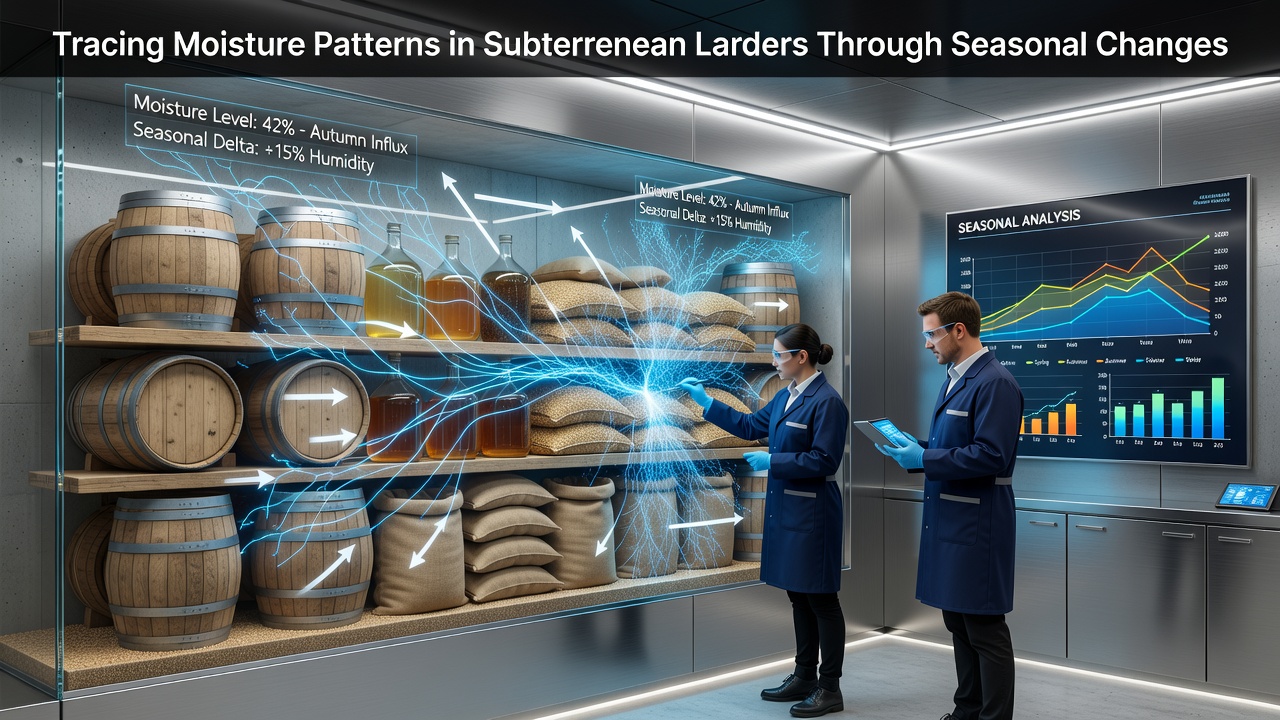
Subterranean larders sit below ground where temperature gradients and soil conditions drive ongoing shifts in humidity and water vapor movement, and these patterns evolve distinctly across the calendar year. Observers note that air exchange with the surface, combined with groundwater proximity, creates measurable cycles that researchers track using sensors placed at multiple depths and locations within storage chambers.
Core Mechanisms Behind Moisture Movement
Water vapor travels along pressure differentials that form when warmer air meets cooler surfaces, while capillary action in surrounding soils pulls liquid moisture toward foundation walls during wet periods. Data from long-term monitoring projects shows that vapor diffusion rates increase when temperature differences exceed 5 degrees Celsius between interior spaces and adjacent earth layers, and this process accelerates further when ventilation remains limited. Researchers have mapped these flows by placing humidity probes alongside temperature loggers to capture hourly readings that reveal consistent directional trends rather than random spikes.
Spring and Summer Patterns
As surface soils warm in spring, moisture from snowmelt and rainfall begins migrating downward, and this influx raises relative humidity inside larders even when outdoor air feels drier. Studies conducted across multiple sites indicate that vapor levels inside chambers often peak two to three weeks after heavy surface precipitation, because the lag allows water to percolate through soil pores before reaching storage zones. During summer months the gradient reverses in many regions, with warmer exterior air holding more moisture that then condenses on the cooler larder ceilings and walls once it enters through small openings or cracks.
Monitoring Techniques Used by Field Teams
Teams deploy capacitance sensors and thermal imaging cameras to visualize where condensation forms most readily, and they cross-reference these readings with soil moisture probes installed at varying distances from the structure. One project in central Canada collected continuous data over eighteen months and found that spring infiltration events consistently raised interior dew points by 3 to 4 degrees above wall surface temperatures, creating ideal conditions for droplet formation on north-facing surfaces. Similar equipment arrays placed in European test cellars have produced comparable seasonal curves, confirming that the underlying physics remain consistent across different latitudes and soil types.
Autumn and Winter Shifts
Falling temperatures in autumn reduce the capacity of air to hold water vapor, so excess moisture condenses more readily while ventilation openings allow drier outdoor air to enter and lower overall humidity when conditions permit. Winter brings the opposite pressure: frozen surface soils limit new water input, yet interior heating from stored produce or occasional human activity can drive localized evaporation that raises humidity near floor level. Records collected through September 2026 at several North American sites show that these winter vapor increases often concentrate in the lowest 30 centimeters of chamber height, where temperatures stay most stable.
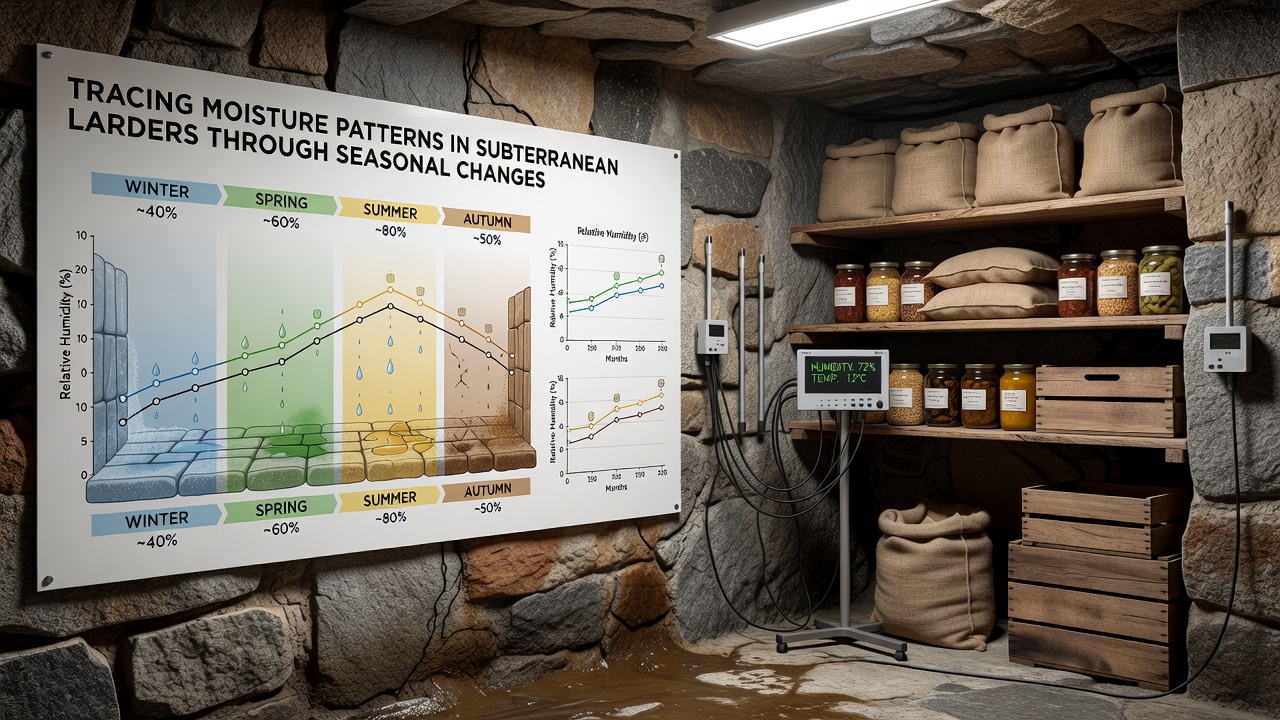
According to findings published by the Australian Department of Agriculture, seasonal moisture curves in underground storage follow predictable sinusoidal patterns that repeat annually when external variables remain steady. Those same records highlight how clay-rich soils amplify autumn condensation events because they retain water longer than sandy substrates, creating sustained vapor sources that continue feeding interior spaces well after surface rain has stopped.
Regional Variations and Data Comparisons
Comparative studies between temperate and continental climates reveal that larders located near large bodies of water experience smaller seasonal swings because groundwater tables buffer temperature changes, whereas inland sites show sharper transitions tied directly to rainfall events. Research teams at the University of Saskatchewan have documented that sites with active ventilation systems exhibit 15 to 20 percent lower peak humidity readings during summer months compared with sealed chambers in the same region, although the benefit diminishes once outdoor air itself becomes saturated. These measurements rely on standardized protocols that allow direct comparison across continents and soil conditions.
Conclusion
Long-term sensor networks continue to refine understanding of how moisture migrates through subterranean storage environments, and the accumulated datasets now support predictive models that forecast humidity ranges weeks in advance based on surface weather and soil conditions. Observers note that consistent placement of monitoring equipment at standardized depths enables clearer identification of repeating seasonal signatures, while integration with regional climate records improves the accuracy of those forecasts. The patterns documented across multiple continents demonstrate that moisture movement follows measurable physical principles rather than erratic fluctuations, providing a foundation for further systematic observation in coming years.