Otto Krause · 12 October 2026
Underground Vaults and the Hidden Chemistry of Ethylene Gas in Long-Term Produce Storage
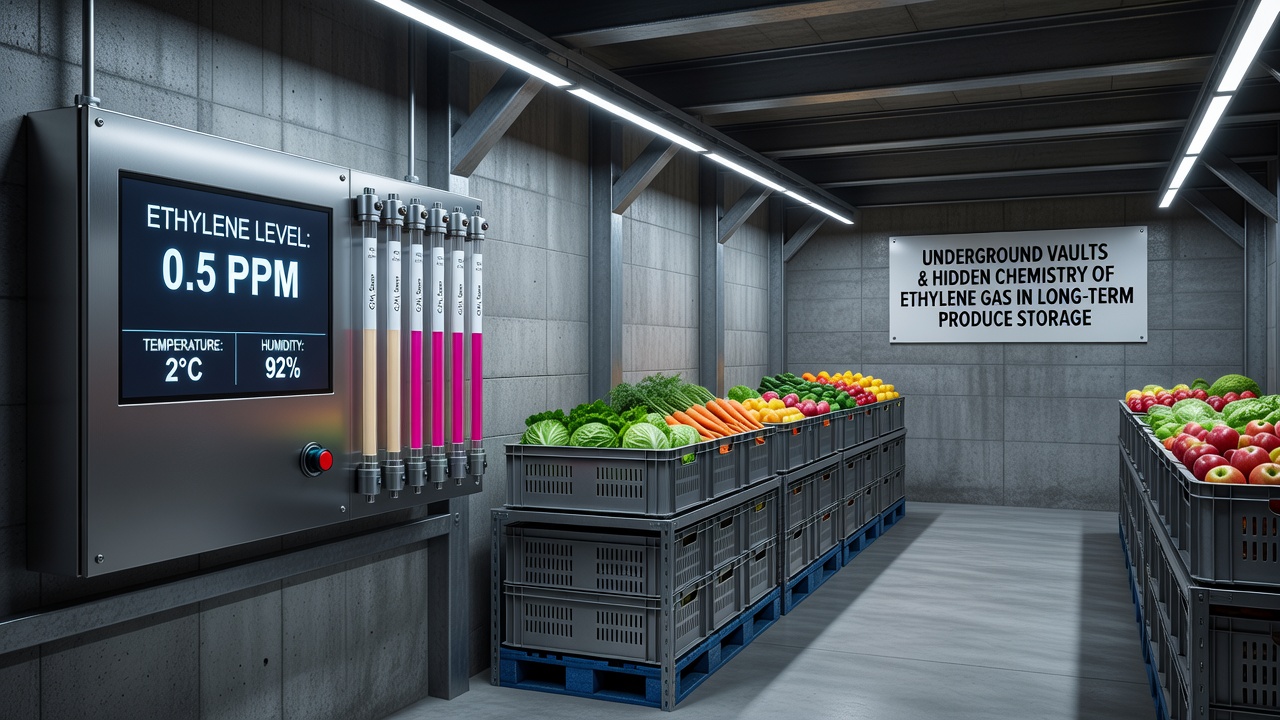
Underground vaults have served as reliable structures for preserving fruits and vegetables across many agricultural regions since the early days of commercial farming, and their design often incorporates natural temperature stability that surface facilities struggle to match without heavy energy input. Researchers track how these spaces interact with ethylene gas, a simple hydrocarbon compound that plants release naturally during ripening processes. Data from long-term storage operations shows ethylene concentrations can rise quickly in enclosed environments, triggering accelerated softening and decay in sensitive crops like apples, bananas, and tomatoes.
Design Features of Modern Underground Vaults
Engineers construct these vaults with thick earthen walls and controlled air exchange systems that maintain humidity levels between 85 and 95 percent while keeping temperatures near 0 to 4 degrees Celsius for most temperate produce. Studies conducted by agricultural research stations indicate that the stable geothermal properties of underground sites reduce temperature fluctuations to less than 1 degree Celsius daily, a factor that slows metabolic activity in stored items. Ventilation ducts positioned at multiple heights allow operators to flush out accumulated gases without introducing warm exterior air that could disrupt the cold chain.
Operators monitor carbon dioxide buildup alongside ethylene because both compounds affect respiration rates, and facilities built since 2015 often integrate sensors that log these levels every fifteen minutes. One facility in the Pacific Northwest reported maintaining ethylene below 0.1 parts per million for six months by combining periodic venting cycles with potassium permanganate scrubbers that oxidize the gas on contact.
Ethylene Chemistry and Its Effects on Stored Crops
Ethylene functions as a plant hormone with the chemical formula C2H4, binding to receptor proteins in fruit tissues and activating genes responsible for cell wall breakdown and chlorophyll degradation. Laboratory measurements reveal that exposure to just 1 part per million for 24 hours can advance ripening in climacteric fruits by several days, while non-climacteric vegetables such as carrots and cabbage show increased decay rates under the same conditions. Research indicates that the gas diffuses rapidly through air spaces in crates and bins, creating concentration gradients that operators must map carefully to avoid localized hotspots near the center of large stacks.
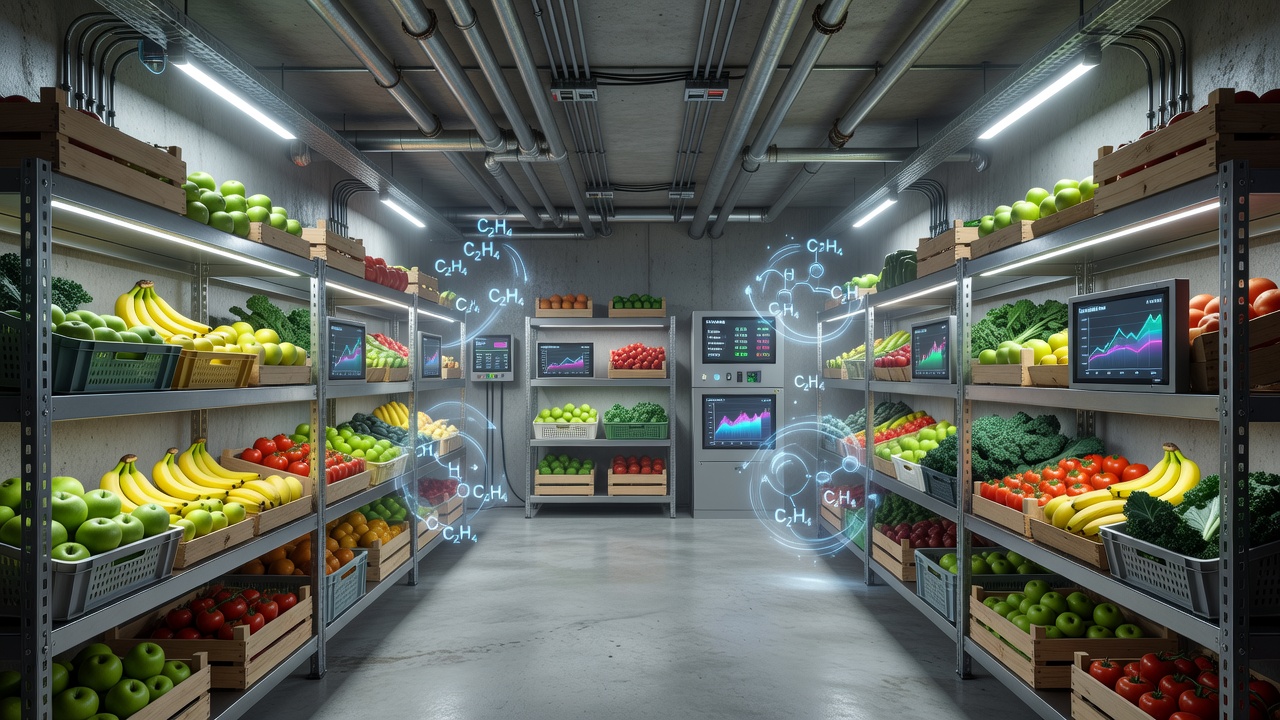
Scientists have identified that low oxygen atmospheres below 3 percent combined with elevated carbon dioxide above 5 percent suppress ethylene production in many apple varieties, extending storage life by weeks. According to findings published through the Agricultural Research Service, controlled atmosphere rooms in underground vaults achieve these gas mixtures more efficiently because the surrounding soil mass buffers external temperature swings that would otherwise require frequent adjustments.
Management Practices in October 2026 Operations
Facilities preparing for the 2026 harvest season have begun adopting automated ethylene scrubbers that regenerate every 48 hours, reducing manual labor and keeping average gas levels under 0.05 parts per million across entire vault sections. Records from Canadian storage cooperatives show that integrating real-time gas analytics with variable-speed fans cut energy consumption by 18 percent compared with fixed ventilation schedules used five years earlier. Operators also separate high-ethylene producers such as ripe pears from sensitive items like leafy greens by installing physical barriers and independent air circuits within the same vault complex.
Training programs emphasize recognizing early signs of ethylene damage, including uneven color changes and softening textures, so crews can isolate affected lots before losses spread. Data collected through the European Food Safety Authority network indicates that consistent monitoring protocols reduced post-storage waste from 7.2 percent to 4.1 percent in participating facilities between 2023 and 2025.
Interactions Between Vault Environment and Gas Dynamics
Moisture films on produce surfaces can absorb small amounts of ethylene, yet the primary removal mechanism remains active ventilation or chemical absorption. Observers note that humidity above 90 percent slows the reaction rate of some scrubber materials, requiring operators to adjust replacement intervals during periods of high transpiration from root vegetables. Temperature inversions near the floor of deeper vaults sometimes trap heavier gases, prompting the installation of low-level extraction points that pull air downward before it exits through roof stacks.
Case studies from Australian research stations demonstrate that combining underground thermal mass with solar-assisted ventilation maintains target gas concentrations during shoulder seasons when ambient temperatures swing widely. These systems rely on pressure differentials rather than constant fan operation, preserving the energy advantages that make subterranean storage attractive for large-scale operations.
Conclusion
Underground vaults continue to provide stable conditions that complement modern ethylene management techniques, allowing operators to extend storage windows for commercial produce while meeting quality standards required by distributors. Ongoing refinements in sensor placement, scrubber chemistry, and airflow modeling support consistent results across different crop types and seasonal conditions. Facilities that track both environmental parameters and gas concentrations report measurable improvements in shelf life and reduced losses, confirming the practical value of integrating structural design with precise chemical control.